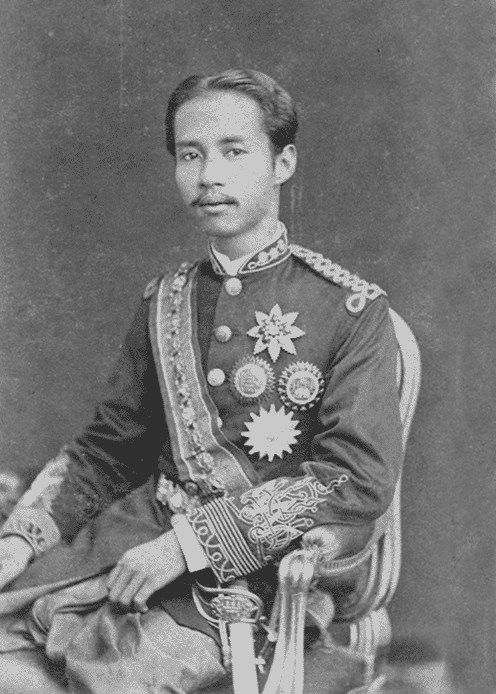
The reign of King Chulalongkorn (Rama V) marked a transformative era for Siam as the country faced the pressures of modernization and colonial threats from Western powers. Recognizing the urgency of reform, King Chulalongkorn spearheaded a series of changes in governance and administration to safeguard Siam's sovereignty and adapt to global standards.
Among the great reforms was the establishment of a public audit system, a measure that underscored the importance of transparency and accountability in managing state finances. The creation of this system was not merely an administrative adjustment; it was a bold step toward modern state governance that aimed to minimize corruption and mismanagement of public funds.
The Birth of Public Auditing in Siam
The foundation for Siam’s public auditing system was laid with the enactment of the "Act for the Ministry of the Treasury and Related Departments on Financial Disbursement" in 1875 (Rattanakosin Era 119). Known as Siam’s first fiscal law, this act introduced a formal framework for overseeing government expenditures.
Within this act, Section 8 became particularly notable as it established the "Audit Office", a pioneering institution tasked with overseeing financial transactions.
Section 8: The Core of Audit Reform
Comprising 16 clauses, Section 8 outlined the powers and responsibilities of the Audit Office (known in English as the “Audit Office”). It granted the office the authority to monitor and verify the financial transactions of all government departments. This marked a significant shift from the previous, less structured approach to public financial oversight.
The primary responsibilities of the Audit Office included:
1. Verification of Government Expenditures: Ensuring all disbursements adhered to accounting principles and were supported by appropriate documentation.
2. Procurement Oversight: Reviewing expenditures related to procurement and other government operations.
3. Accountability for Funds: Inspecting whether funds were used as intended and certifying their legitimacy.
4. Reporting to the Throne: The Auditor General (known as "Auditor General") was required to compile audit reports (referred to as "reports") and submit them directly to the King by August (then the fifth month in the traditional Siamese calendar).
Notably, the term for auditors in the act was "Inspectors," reflecting the direct and investigative nature of their responsibilities.
The First Auditor General: A Royal Appointment
The first Auditor General was Prince Devawongse Varoprakar, who later became a key figure in Siam’s modernization efforts.
His appointment signified the King’s dedication to creating a credible and independent audit institution. Under his leadership, the Audit Office set a high standard for transparency and accountability in government finances.
Transparency and Independence
King Chulalongkorn was deeply invested in financial accountability. Historical records show that he dedicated significant time to reviewing financial reports from the Ministry of the Treasury twice daily. This practice reflected his commitment to ensuring the integrity of state finances and fostering public trust in the monarchy’s administration.
A Step Toward Modern Governance
The establishment of the Audit Office under Section 8 of the 1875 fiscal law was more than a bureaucratic reform; it was a deliberate step toward modern governance. By creating an institution rooted in principles of transparency and independence, Siam demonstrated its resolve to modernize and protect itself from the encroachment of colonial powers.
In conclusion, the reforms initiated during the reign of King Rama V, particularly the establishment of the Audit Office, underscored Siam’s aspirations to align with international standards of governance.
Section 8 of the 1875 fiscal law remains a testament to Siam’s early commitment to accountability and its determination to navigate the complexities of modernization.
Read “Section 8 of Siam's First Fiscal Law (1875): A Spark for Public Audit Reform under King Rama V“ by Sutthi Suntharanurak on Medium:
https://medium.com/@sutthisun/section-8-of-siams-first-fiscal-law-1875-a...
Dr. Sutthi Suntharanurak